
By Dailysunr | Desks: Legal Strategy, Public Safety Advocacy, Education, and Editorial
The £150 Fine That Sparked a Storm

When a woman was fined £150 for pouring water down a London drain, public reaction was swift – and largely uninformed. “It’s just water,” many said. “What harm can it do?” But this seemingly trivial act touches on a far deeper issue: the public’s lack of awareness about what drains are for, what they’re not for, and how misuse can compromise public health, environmental safety, and even national security
This article is not about one woman’s fine. It’s about the system we all rely on—and how ignorance, if left unchecked, can be weaponized.
What Are Drains Actually For?
There are two main types of drains in the UK:
- Surface Water Drains: These carry rainwater only from roads, roofs, and pavements directly into rivers, streams, and other natural watercourses – without treatment.
- Foul Water Drains (Sewers): These carry wastewater from toilets, sinks, and appliances to treatment plants.
Key point: Surface water drains are not connected to treatment facilities. Anything poured into them – coffee, oil, detergent, or worse – goes straight into the environment.
What the Law Says
Pouring anything other than uncontaminated rainwater into a surface water drain is not just irresponsible – it’s illegal.
Relevant Legislation:
- Environmental Permitting (England and Wales) Regulations 2016: Requires permits for discharges into surface or groundwater. Unauthorised discharges are criminal offences.
- Water Industry Act 1991: Makes it an offence to discharge trade effluent into public sewers without consent.
- Control of Pollution (Amendment) Act 1989: Empowers authorities to prosecute those who cause or knowingly permit pollution of controlled waters.
Why “Just Coffee” Is a Dangerous Precedent
Let’s think beyond the cup.
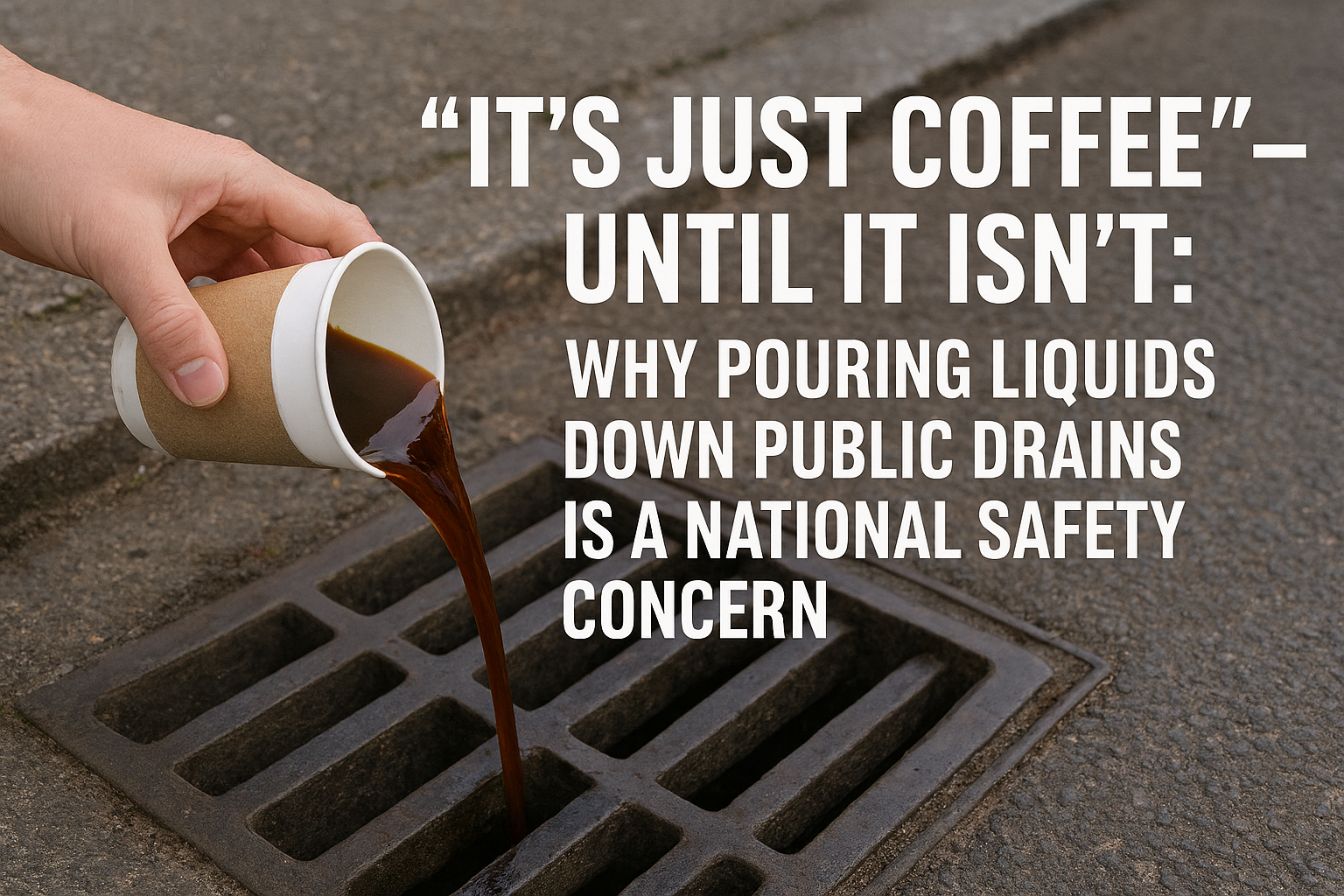
- Chemical mimicry: A dark liquid poured into a drain could be coffee – or it could be oil, pesticide, or a corrosive agent.
- Biological threats: In an age of biosecurity concerns, even a small act like this could be exploited to introduce pathogens or toxins into public infrastructure.
- Terrorism risk: London’s vast underground network – including the Tube – relies on secure, uncontaminated drainage. A single act of sabotage could affect thousands of commuters, trigger evacuations, or worse.
Allowing casual disposal of liquids into public drains creates a normalized cover for malicious activity. It’s not about the coffee – it’s about the precedent.
London Underground and Drainage Vulnerability
The London Underground is one of the most complex subterranean systems in the world. Its drainage infrastructure is critical to:
- Preventing flooding
- Maintaining air quality
- Protecting electrical systems
- Ensuring structural integrity
Any unauthorized liquid entering this system – directly or indirectly – can compromise safety, delay services, or trigger emergency protocols.
Public Health and Environmental Impact
- Contaminated runoff can kill aquatic life, pollute drinking water sources, and damage ecosystems.
- Fats, oils, and grease (FOG) poured down drains cause “fatbergs” – massive blockages that cost millions to remove.
- Chemical interactions in drains can release toxic gases or corrode infrastructure.
What Should the Public Do Instead?
- Dispose responsibly: Use bins, sinks, or designated disposal points – not street drains.
- Report misuse: If you see someone pouring liquids into a drain, report it to your local council. You can also report it to the Environment Agency.
- Educate others: Share this article. Start conversations. Challenge the “it’s just water” mindset.
A Call to Councils, Courts, and Classrooms
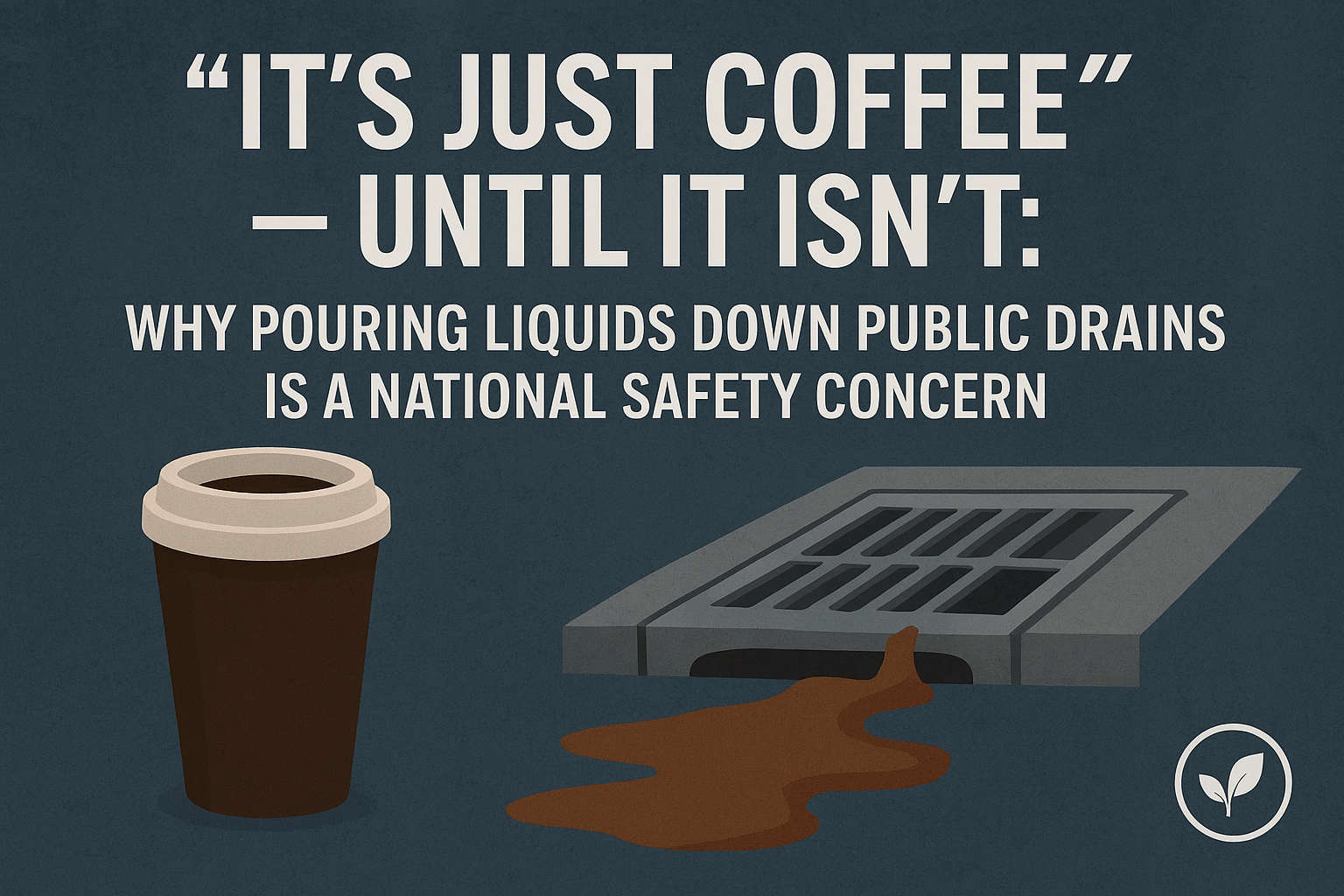
This is a teachable moment. Councils should invest in public signage and campaigns. Courts should continue to enforce fines as deterrents. Schools and universities should integrate environmental law and civic responsibility into their curricula.
This isn’t about punishment – it’s about prevention.
Final Word
Drains are not bins. They are arteries of our cities – vital, vulnerable, and often invisible. The next time someone shrugs off a fine for pouring coffee down a drain, ask them: What if it wasn’t coffee?
Let’s not wait for a crisis to value the systems that keep us safe.
Sources: Environmental Permitting Regulations – GOV.UK
Can You Put That Down the Drain? – The Compliance People.
Syndicate Article or order content. Contact Author


